Soft autumn is the season most people misidentify, not because it's hard to see, but because "warm" and "muted" look like opposites until you understand they're two different dials. Warm autumn turns the warmth dial to 8 and the saturation dial to 7. Soft autumn turns the warmth dial to 6 and the saturation dial down to 3. Same family. Different volume.
The mistake that puts most soft autumns in the wrong season is a saturation error. Warmth gets the blame; saturation is the actual problem. Most Pinterest boards tagged "soft autumn" run 40% warm autumn palettes. That matters before you buy anything, because the soft autumn palette is a narrow band of medium-value, warm-undertone, desaturated hues that flatter one kind of coloring and drain most others. Camel instead of rust. Sage-olive instead of forest green. Dusty rose instead of terracotta. Warm colors with the air let out.
This guide covers who soft autumn fits, the 24 canonical hex codes that define the palette, the colors to avoid, and the three celebrities every color-analysis community types the same way. If rust and cinnamon keep washing you out after someone told you you're a warm autumn, you're probably in the wrong subtype. That $300 cinnamon sweater draining your face is evidence, not bad luck. Check the saturation dial.
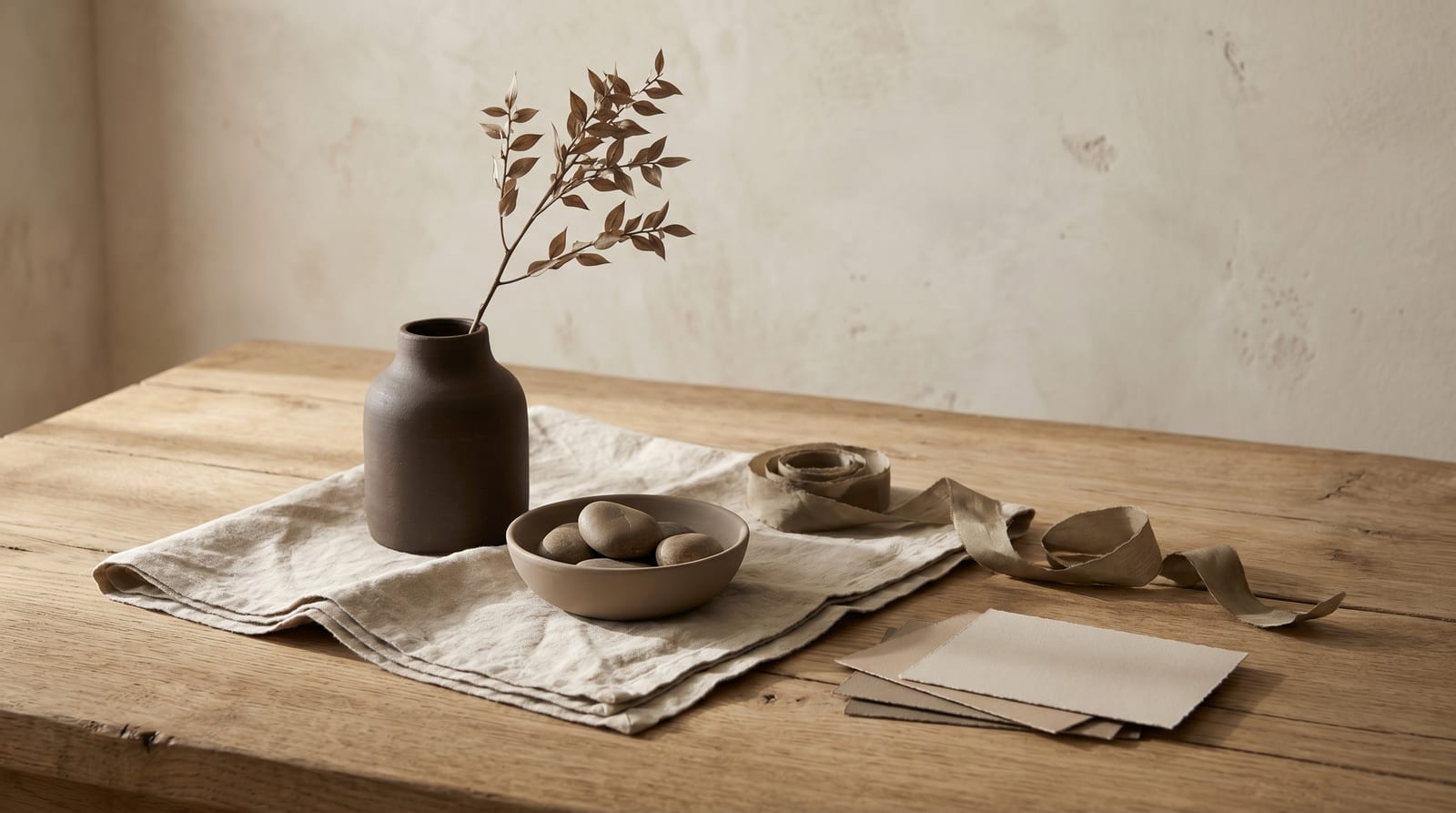
Who soft autumn fits
Soft autumn coloring is warm, muted, and medium in value. Those three words do real work once you hold them against your own hair, eyes, and skin.
Hair. Soft autumns almost always have medium-to-dark hair with a warm undertone. Think mousey-warm, dusty brown, or ash-warm blonde. The hair isn't red or auburn the way true autumn's often is, and it isn't platinum or silver the way soft summer's can be. If you've ever been told your hair is "hard to describe" or "a weird in-between color," you might be a soft autumn. The muted warmth is the whole point.
Eyes. Hazel is the most common soft autumn eye color, but it's not the only one. Soft green, grayish-warm brown, and muted blue-green all fit. The giveaway is that the eye color looks softer up close than you'd expect: the saturation pulls back, even in bright light.
Skin. A soft autumn's skin has a warm undertone but not a bronze one. "Warm but delicate" is the descriptor most professional analysts use. You likely tan slowly, burn occasionally, and look best in gold jewelry rather than silver.
Contrast level. Low to medium. Hold a photo of yourself up against a high-contrast outfit (stark black next to stark white) and you'll notice the outfit looks louder than you do. Soft autumn's contrast is gentle across all three features, not dramatic.
Three of those four landing on you makes soft autumn the likely read. With only two, the direction the other pair leans becomes the tiebreaker: warmer or deeper points to warm autumn, cooler points to soft summer. Both forks get their own comparison further down.
Soft autumn across different skin tones
Almost all of the seasonal-color literature was written about lighter, European coloring, and the descriptions above inherit that. The season is wider than its documentation. What sets soft autumn is a warm-leaning undertone, muted rather than saturated coloring, and medium value at low contrast. Skin depth appears nowhere on that list. Soft autumn exists at every depth.
The trap is reading deep skin as automatically "deep" or "winter." Those labels describe contrast, not complexion. A deep season means dark eyes and hair set against much lighter skin. Skin tone alone still sends a lot of people of color to deep autumn or deep winter when their actual coloring is soft and blended. The tell holds across every ethnicity, and it's the one from the checklist above: your features melt into each other instead of popping. Skin, hair, and eyes read as one soft, slightly grayed harmony.
The look shifts with background. South Asian soft autumn skin runs warm beige to medium brown with a sand or olive cast. The hair carries gold or a faint auburn, and the eyes come in green, hazel, or light brown with a gray softness laid over them. East Asian soft autumn reads neutral-beige with olive depth and low contrast, what some analysts call "tea-toned." On Black and deeper skin it shows up as a muted, low-contrast warmth. Soft pinky-peach and bronzy tones light the face up. The deep jewel tones you'd expect to suit deeper skin tend to distract from it instead. Latina and Middle Eastern soft autumns usually land at medium depth, warm or neutral-olive, with light-to-medium brown hair and soft, warm eyes.
The deeper the skin, the thinner the documentation gets, and South Asian soft autumns are the least recorded of anyone. Most famous Indian names get typed deep or warm autumn rather than soft: Priyanka Chopra, Deepika Padukone, Aishwarya Rai. That tells you who gets analyzed. It doesn't tell you the season skips anyone. One check works at any depth. Hold a muted camel or sage to your face, then a bright jewel tone or an icy white, and watch which one makes your skin glow and which one takes the picture over. If gold flatters you more than silver, your undertone is warm. Fairness never enters it.
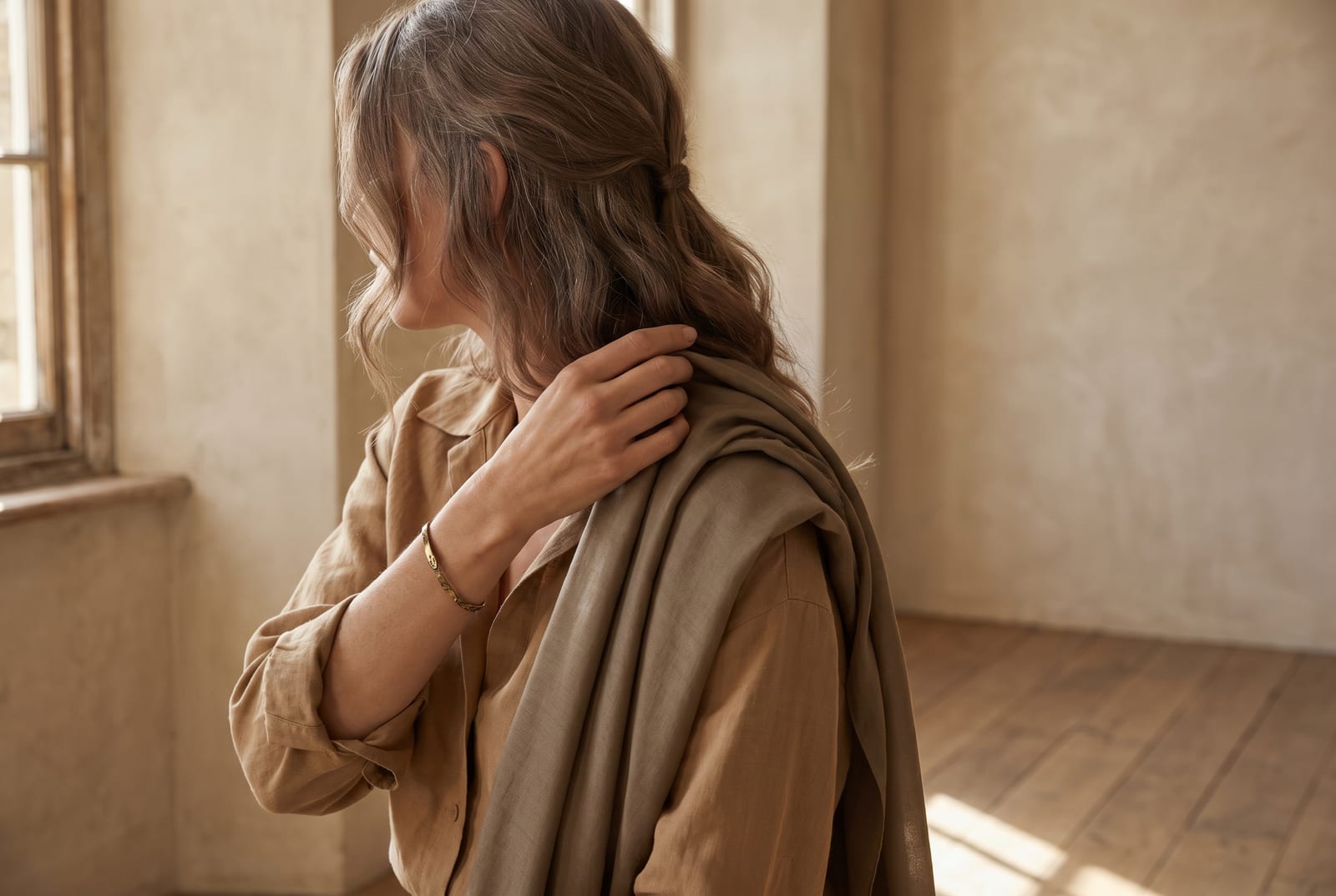
The soft autumn color palette
Twenty-four hex codes, sorted by the job each one does. Every color sits in the muted-warm zone: saturation below 40%, lightness in the medium band of roughly 55 to 75%, hue leaning warm.
How to read this palette
A grid of hex codes is not yet a wardrobe. Three roles turn it into one, and naming the job a color does is what makes the shopping decisions fast.
Anchors (the foundation, roughly eight colors). Camels, warm creams, mushroom taupes, dusty khaki, soft brown. These carry the ordinary days. Give them roughly 60% of the wardrobe, because everything else sits on top of that base layer.
Accents (the personality, roughly 12 colors). Sage-olive, dusty rose, burnished gold, soft teal, terracotta, deep soft moss. Accents are where a soft autumn wardrobe gets interesting without breaking the muted register. One accent piece per outfit is usually enough. Two if the values are close.
Grounds (the depth layer, roughly four colors). The deeper soft browns and dusky olives that sit underneath everything else. Grounds replace black in a soft autumn wardrobe. They're the shoe, the belt, the structured outer layer that creates depth without spiking contrast.
A useful test: try building a head-to-toe outfit using only anchors. If you can put something together that feels complete with no accents and no grounds, you're working inside the soft autumn band correctly. If you need a stark contrast to "rescue" the look, you've probably wandered into a different season's palette.
Drop a pure black into this palette and everything around it looks wrong. These colors were built to sit together, and one loud neighbour breaks the effect. Pair a camel with a dusty rose and the eye reads them as related. Pair that same camel with electric blue and the eye takes the blue and drops the camel.
Neutrals for soft autumn
Most of a wardrobe is neutrals, worn on the days nobody is thinking about color. Soft autumn's run warmer than summer's gray-based set and softer than true autumn's deep espresso-and-charcoal end.
: the foundation. Nothing in the accent range clashes with it.
: the "white" of this season. Never use pure #FFFFFF when you can use this.
: the mid-tone neutral. Works as a blazer, a trouser, or a throw.
: slightly olive-shifted. The most "autumn" of the neutrals without tipping into warm autumn's saturation.
: the deepest neutral. Replaces black. Grounds everything.
Five neutrals plus the 19 accents above is the entire set. Nothing else is required.
Colors to avoid
Five hex codes fight this palette outright:
: too stark. The contrast is louder than your coloring can sustain. Swap for soft brown #6B5D4F.
: too bright. Cools the skin and flattens the warmth. Swap for warm cream #E8DFD3.
: too saturated. Dominates every face it sits near. Swap for dusty rose #D4A5A5.
: too cool and too vivid. The double-whammy clash. Swap for soft teal #6B9B95.
: too bright for this palette's muted register. Swap for burnished gold #C9A96E or soft terracotta.
The pattern: anything above 60% saturation clashes, and anything with a strong cool undertone drains the warmth. There's nothing wrong with any of them; they're wrong here. A saturated fuchsia that drowns a soft autumn will look stunning on a bright winter.
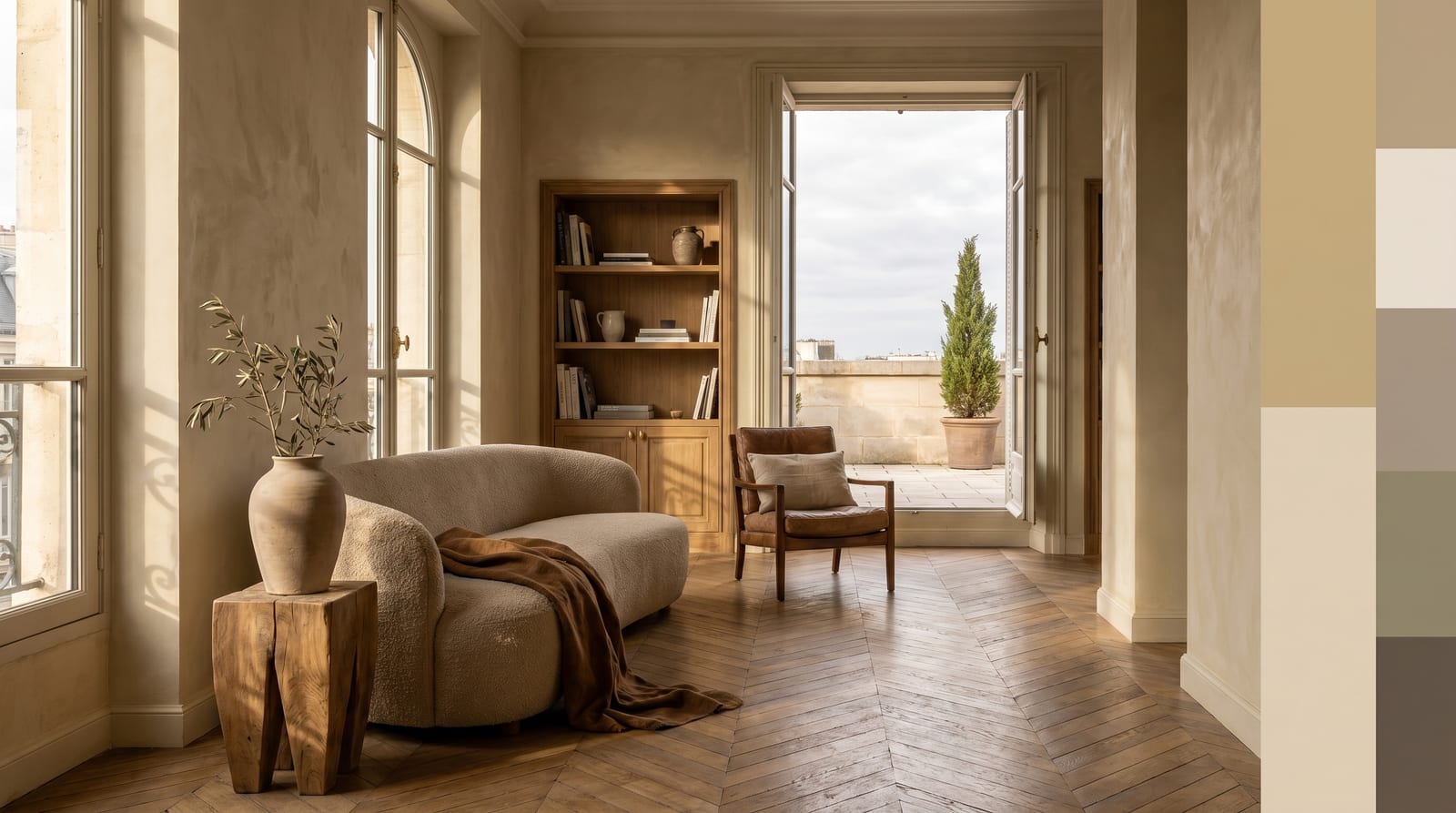
Celebrity examples
Three names are typed soft autumn by every color-analysis community that publishes celebrity lists: theconceptwardrobe, four seasons studio, and truth-is-beauty. Three analysts reaching the same verdict independently is worth more than any one of them reaching it alone.
Drew Barrymore. Classic soft autumn coloring: medium-warm hair, soft hazel eyes, warm-but-gentle skin. Her most flattering looks sit in the camel-to-soft-brown zone with dusty rose lips. Her best red-carpet pulls are sage-olive dresses and warm cream knits with gold jewelry. When she's styled in high-contrast black-and-white, the styling fights her coloring and you see the outfit, not her. Her recent blonde era is also worth studying: when she goes too ash, the warmth dial drops and she reads more soft summer than soft autumn. The natural warm-mouse base is the right anchor. Drew is the textbook reference for soft autumn at a lighter-skin depth.
Kate Winslet. Soft autumn with slightly more depth than most. Her warm-mousey hair and soft green-hazel eyes put her firmly in the subtype. Some analysts push her toward warm autumn, but only when her hair has been colored redder than her natural base. Look at her pre-2010 press photos for the clearest soft autumn reference. She's wearing the palette without fighting it: camel coats, warm beige knits, dusty rose lips, gold-bronze eye shadow. The Mare of Easttown era is also useful, where the muted earth tones of the costume design happen to land squarely inside the soft autumn band. When she's been styled in jewel-tone gowns at award shows, the gown reads first and Kate reads second.
Rachel Weisz. Soft autumn's darker end. Her medium-dark warm hair, muted green eyes, and warm-but-low-contrast skin fit the subtype even as her depth skews deeper than Drew Barrymore's. Rachel Weisz is the proof that soft autumn is a muted season, not a light one. Depth and softness coexist. Her best looks lean into deeper soft browns, burnished golds, and sage-olive paired with soft-brown leather, and they consistently work. When she's been put in stark black or bright jewel tones, the same disappearing effect happens. The clothes wear her instead of the other way around. Use Rachel as the calibration point if your own coloring runs deeper than the typical pale-haired soft autumn reference photo.
Four more names appear on some lists and not others: Eva Mendes, Jennifer Aniston, Marion Cotillard, Mariah Carey. Where one site says soft autumn and another says warm autumn, the argument is almost always about saturation rather than hue. Hold those four loosely. Jennifer Aniston lands in both camps depending on which decade of press photos the analyst worked from, which disqualifies her as a clean reference for either. Mariah Carey splits the same way, her depth pulling some lists toward true autumn.
All three anchors skew light-skinned. That reflects how the color-analysis world documents its examples, not the reach of the season. Soft autumn shows up at every skin depth, and several names hold up across more than one source. Nicole Richie is a low-contrast, soft olive-toned soft autumn, typed that way by theconceptwardrobe, Spicemarket Colour, and others with no real dissent. Thandiwe Newton, evenly bronzed and softly glowing with the blended low-contrast look the season runs on, gets typed soft autumn by The Aligned Lover's women-of-color edition, Spicemarket Colour, and ToneMatch. Nathalie Emmanuel lands the same way across Spicemarket, Soul of Color, and ToneMatch. Devon Aoki is the most-cited East Asian reference, though analysts there split between soft and true autumn, so call her autumn for sure and soft most likely.
The documentation gets thinner the deeper the skin, and South Asian soft autumns are the least recorded of all. The face on the list matters less than the three readings behind it: warm undertone, muted rather than saturated, medium contrast rather than stark.
Makeup and wardrobe recommendations
The soft autumn palette translates directly into wardrobe and makeup decisions. The rule in both is the same: warm undertones, muted saturation, medium depth.
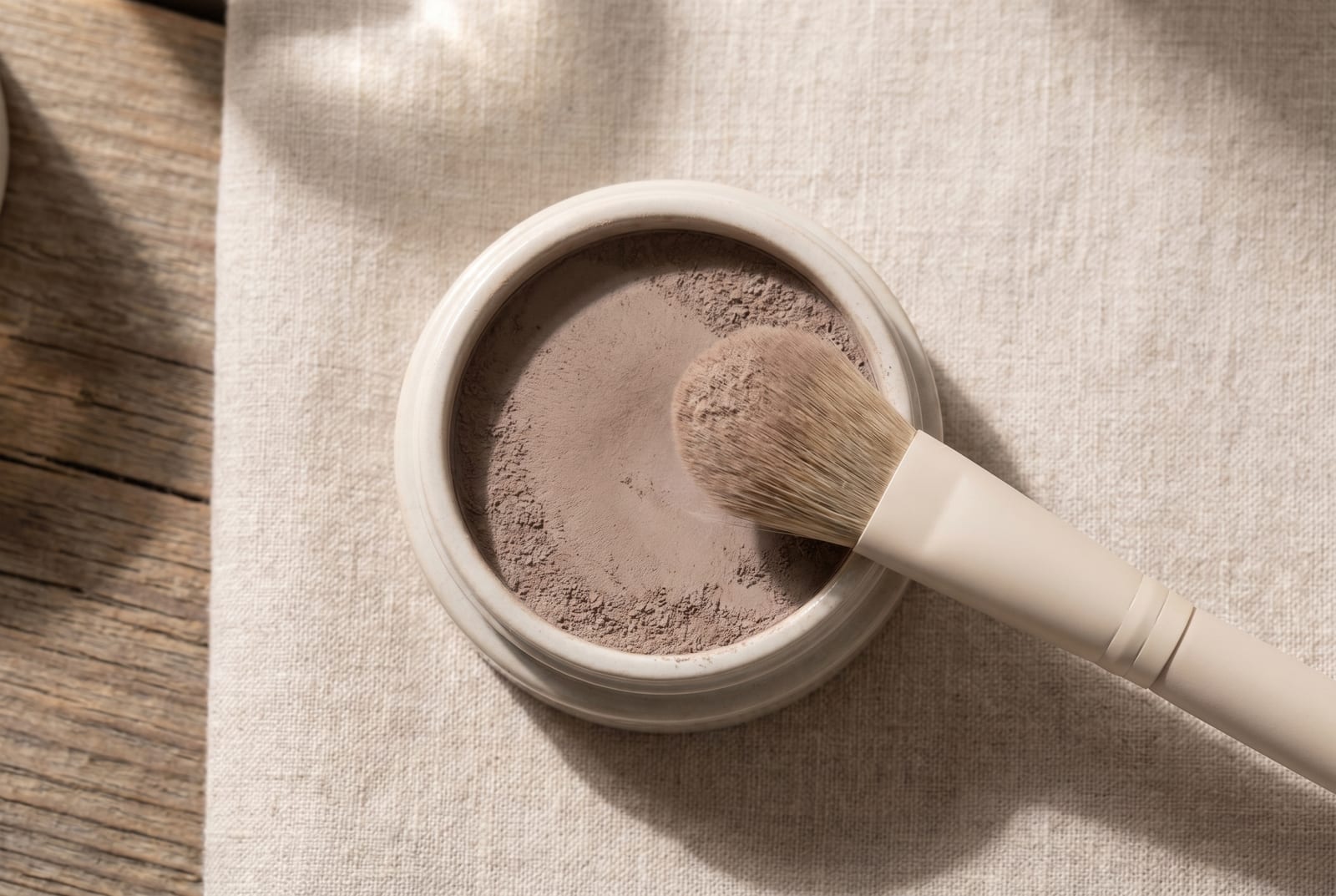
Foundation. Warm or warm-neutral undertone. Avoid anything labeled "cool," "pink," or "rosy." Most major brands label these "warm," "golden," or "honey" in their undertone naming. MAC's NC range (NC15 through NC40 depending on depth) typically lands in the warm-undertone band most soft autumns sit inside. NARS Sheer Glow in shades like Punjab and Stromboli is a frequent soft autumn match. Avoid the cool NW range, which pulls pink against soft autumn warmth.
Lip. Rose-brown, warm nude, muted coral, dusty rose, soft terracotta. The lip-shade sweet spot for soft autumn is "warm muted." Charlotte Tilbury's Pillow Talk Original sits inside this band. NARS Dolce Vita is another perennial soft autumn pick. Avoid true red, berry, and pure pink. All three out-saturate the palette and pull the eye away from the face.
Eye. Bronze, copper, warm taupe, soft olive, muted gold. Shimmers should be gold-based, not silver. The Urban Decay Naked Heat palette and the Charlotte Tilbury Pillow Talk eye quad both run warm-muted enough to fit. Avoid cool grays, silver, icy blues, and anything in the smoky-black register. They fight the warm-soft undertone every time.
Jewelry. Gold, brushed bronze, antique brass, soft copper. Metal behaves like fabric here: match it to the temperature of your coloring and it settles into the face instead of competing with it. Warm coloring, warm metal. Sterling silver fights this palette every time, and no amount of stylist insistence makes it work. For something closer to white, pale rose gold or muted champagne beats true silver.
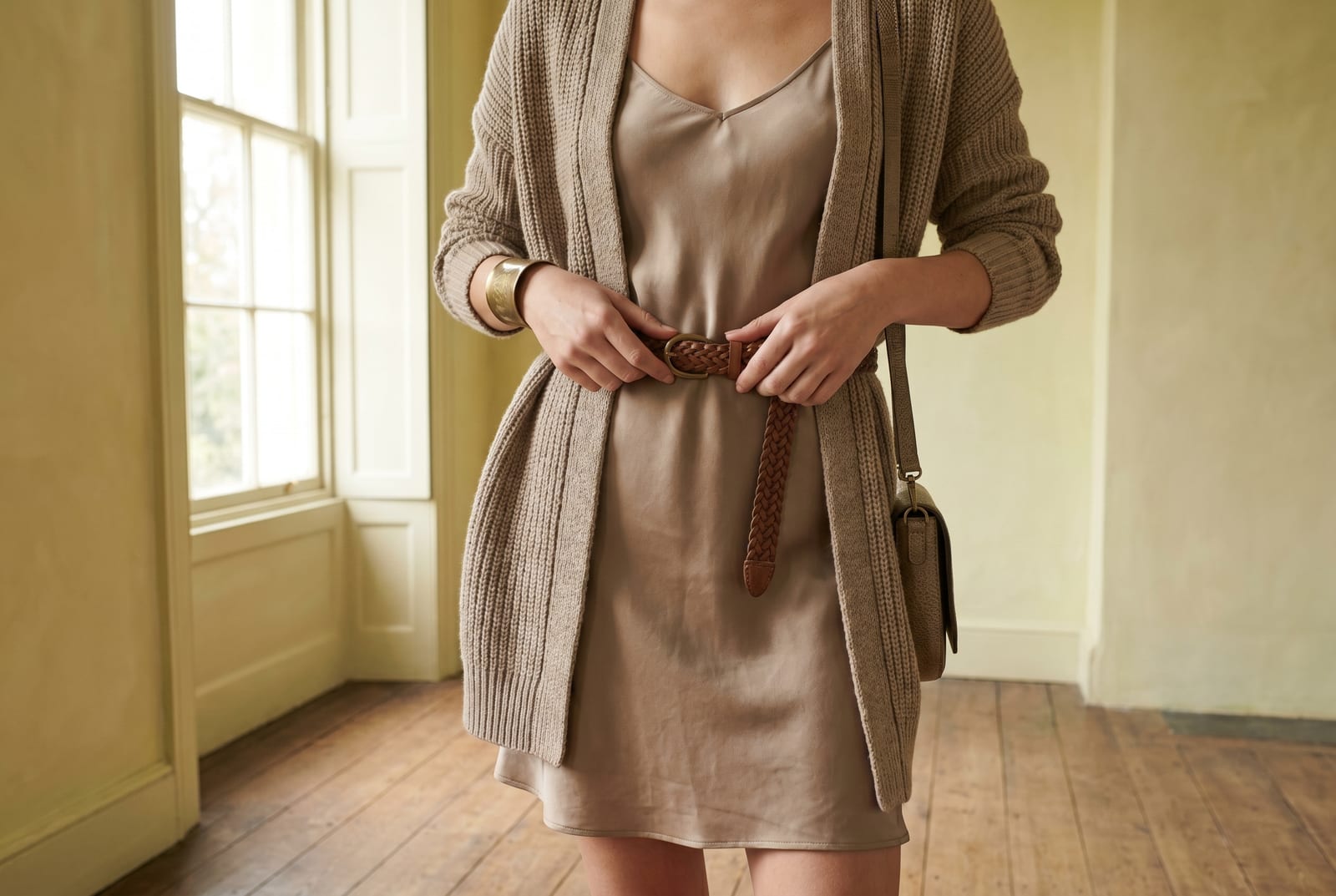
Wardrobe basics (everyday). Camel trench, mushroom-taupe trouser, warm cream knit, soft-brown leather boot, sage-olive jacket. Every one of these comes out of the palette above. No black. No stark white. No neon. Retailers with a heritage-leaning catalog (Toast, Massimo Dutti's autumn collection, Eileen Fisher's earthy seasons) tend to carry pieces that sit naturally inside this band.
Wardrobe accents (statement pieces). Dusty rose silk blouse, burnished gold jewelry, soft teal scarf, terracotta wrap dress, sage knit cardigan. These introduce color without spiking saturation. Aritzia's Wilfred line often carries muted camels and dusty roses worth checking during seasonal drops.
Prints and patterns. Tone-on-tone florals, low-contrast tweeds, faded earth-tone stripes, brushed houndstooth in warm browns. Scale should be small-to-medium with low internal contrast. Avoid bold graphic prints with stark black-and-white contrast. The contrast overrides soft autumn coloring every time.
To take these rules shopping, generate a palette in the Soft Autumn direction and filter by the hex output.
Hair color for soft autumn
Colored hair follows the same logic as everything else here: stay warm, keep it muted, don't stray far from your natural depth. Low contrast is what the season runs on, which is why hair sitting a few warm shades off your skin reads as harmony. Bleached pale, dyed jet black, or pushed cool reads as a fight.
The directions that work are warm and softened: golden and honey browns, caramel, toffee, warm chestnut. Reds should stay muted rather than fiery, so soft copper or a dusty auburn instead of fire-engine red. Colorists work on a level system where 1 is black and 10 is the lightest blonde, and soft autumn lives in roughly the 5-to-9 band. Medium golden or chestnut browns sit around levels 5 to 7; honey and golden blondes around 8 to 9. The plain-English version to hand your stylist: "a level 6 or 7 warm brown with golden undertones," or "a level 8 or 9 golden blonde, no ash."
That "no ash" instruction is the one that matters most. Ask for golden, honey, caramel, copper, or toffee, and say the words "no ash" out loud. An ash toner is what turns a good warm color sallow on soft autumn skin. Purple and blue brass-correcting shampoos do the same damage by accident, so leave those on the shelf too.
Every color here fails one of two checks. Platinum, icy blonde, and jet or blue-black break the muted, low-contrast rule by running too bright or too dark for coloring this gentle. Cool ash, cool espresso, and cool burgundy break the warm rule instead, and the skin ends up looking tired. Bright fire-engine copper manages both at once.
Highlights should stay low-contrast and warm: hand-painted balayage carrying both highlights and lowlights, no more than two or three levels off your base, in golden or caramel tones. Chunky platinum streaks and cool foils wreck the blending the season depends on. And when the gray comes in, warm golden or honey blending and gold-toned glosses hold up better than a cool silver, which tends to wash a soft autumn out.
Comparison with adjacent seasons
Four adjacent subtypes get confused with soft autumn most often. Each comparison turns on a single dial.
Soft autumn vs. warm autumn (the saturation dial). Warm autumn runs at 65-75% saturation; soft autumn sits at 20-40%. If your natural coloring is bright rather than dusty, you're warm autumn. Warm autumn can wear soft autumn colors and look muted; soft autumn wearing warm autumn colors looks overwhelmed. Hold up a saturated rust, #B7410E, and then a muted camel, #B8A282, and watch which one wins. Rust that energizes you means warm autumn. Rust that feels louder than you do, beside a camel that feels settled, means soft autumn.
Soft autumn vs. soft summer (the warmth dial). Both seasons are muted, so the tiebreaker is undertone. Soft summer's palette has cool-shifted dusty roses and soft blue-grays; soft autumn's palette has warm-shifted camels and olive-sages. Hold a camel next to a gray-brown and whichever lights up your face identifies your season. A second test that often resolves the border case: gold versus silver jewelry. Soft autumn faces brighten under gold; soft summer faces brighten under silver. If the metal test gives a clear answer, the palette decision follows from it.
Soft autumn vs. true autumn (the depth and saturation dials together). True autumn is both deeper and more saturated than soft autumn. If you can wear rust, burgundy, and forest green without looking weighed down, you're probably true autumn. The most common mis-type goes the other direction: a soft autumn dressed in true autumn colors looks tired by mid-afternoon. If your favorite rust sweater seems to drain you no matter how many compliments it gets in the changing-room mirror, the lighting may have been flattering it more than you.
Soft autumn vs. dark autumn (the depth dial alone). Dark autumn is the deepest autumn subtype, carrying the same warm-muted register as soft autumn but pushed darker in value. Three readings point that way: hair from dark brown to near-black with warm undertones, eyes in deep hazel or warm dark brown, and more comfort in deep soft browns and burnished olives than in mid-camels. Only depth moves. Saturation stays muted on both sides. Rachel Weisz sits close enough to the line that analysts split, some calling her soft autumn and others putting her at the soft-to-dark transition.
Soft autumn vs. light autumn (the season that isn't). This one trips people up because it sounds like it should exist. It doesn't. The standard 12-season system has three autumns: soft, true (or warm), and deep (or dark). "Light" is a spring-and-summer trait; the light seasons are light spring and light summer. Soft autumn is already the lightest, most muted corner of autumn, which is why people reach for "light autumn" to name it. The term turns up on a few auto-generated palette pages and non-standard charts, but no two of them define it the same way, so there's nothing solid to anchor to. Warm, light, and circling this comparison usually means the real fork is soft autumn versus light spring. Both are warm, soft, and low-contrast. The difference is that light spring can still carry a clear, bright color and soft autumn cannot. Gigi Hadid sits right on that line, draped soft autumn by some analysts and light spring by others.
To see all twelve seasons side by side, the seasonal color analysis hub lays out the full comparison.
Frequently asked questions
How do I know if I'm a soft autumn? Check three anchors: medium-to-dark hair with a warm undertone, hazel or soft green eyes, and skin that reads warm but gentle. All three landing makes soft autumn close to certain. Two landing, with the remainder skewing warmer, points at warm autumn instead.
Can soft autumn wear black?
Not well. Pure black #000000 overwhelms the muted palette and creates contrast that fights soft autumn's low-contrast coloring. Use soft brown #6B5D4F or deep espresso as a functional substitute. Black in small accents, a belt or a shoe, causes no trouble. It's black as a main garment that does the damage.
Can soft autumn wear navy?
Pure navy #000080 is usually too cool and too saturated for soft autumn. The contrast is too sharp against muted warm coloring, and the cool blue pulls against the warm undertone. A softer, warmer-leaning navy with a touch of green or gray (around #3D4A5C) can work in small doses as an accent: a tote bag, a scarf, a structured trouser. As a head-to-toe color, navy fights soft autumn the same way pure black does. If you need a deep blue in your wardrobe, soft teal #6B9B95 or a muted petrol blue sits inside the palette without breaking it.
What's the difference between soft autumn and warm autumn? Saturation. Both seasons are warm; warm autumn runs saturated (rust, cinnamon, deep gold) while soft autumn runs muted (camel, sage-olive, dusty rose). Wearing warm autumn colors when you're soft autumn makes the clothes wear you, not the other way around.
Is soft autumn warm or cool? Warm. The "soft" in the name describes saturation, not temperature. Soft autumn's undertone is warm (golden, honeyed, yellow-shifted), just lower in saturation than warm autumn or true autumn.
Is there a light autumn season? No. The standard 12-season system splits autumn into soft, true (warm), and deep (dark). There's no light autumn. "Light" belongs to spring and summer. Soft autumn is the lightest, most muted end of autumn, so if you've been calling yourself a "light autumn," soft autumn is almost certainly the season you mean. If you're warm but genuinely light and bright, compare yourself against light spring instead.
Can soft autumn have dark skin? Yes. Undertone, mutedness, and contrast decide the season, and skin depth doesn't enter it. The common mistake is filing deep skin under a "deep" or "winter" season on sight, when "dark" in color analysis describes high-contrast features rather than complexion. Medium and deep skin with softly blended features is soft autumn coloring.
What's the best metal jewelry for soft autumn? Gold, brushed bronze, antique brass, and muted copper. Undertone-matching is the whole rule, and soft autumn coloring runs warm. Sterling silver pulls the warmth out of soft autumn skin and creates a temperature clash that reads as "off" even if the wearer can't articulate why. If you genuinely prefer the look of silver, pale rose gold or muted champagne metal gives you a similar visual without fighting your undertone. White gold and platinum should be reserved for cool seasons.
Can men have soft autumn coloring? Yes. The seasonal-color system describes coloring, not gender. Men with medium-to-dark warm-mousey hair, hazel or muted green eyes, and warm-but-gentle skin tones fit the soft autumn profile in exactly the same way women do. The dial settings are identical. The translation into menswear is straightforward: camel coats, mushroom-taupe trousers, warm cream knits, soft-brown leather, sage-olive shirts. Avoid pure-black suiting, stark white dress shirts paired with stark-black ties, and brightly saturated tech-fleece colorways. Masculine reference material is thinner on the ground than the women's-style equivalent, though the analysis carries over without modification.
What brands use a soft-autumn-aligned palette? Aesop's packaging sits inside this palette: sage-olive, warm creams, muted terracottas. Not a coincidence. In the apothecary-as-luxury category, the soft autumn band reads "heritage" rather than "trendy." Burberry's heritage line does the same with camel and warm tan. Same palette, same register, same reason.
Disclosure: BrandColors makes the color-palette generator linked in this guide. The seasonal typings and palettes above are drawn from the external color-analysis sources named throughout (theconceptwardrobe, truth-is-beauty, Spicemarket Colour, and others), not from our product. Last updated July 25, 2026.
Related palettes: Soft Summer · Deep Autumn · Warm Autumn · Seasonal color analysis hub