Deep autumn is the darkest corner of the autumn family, and the season people hand to winter by mistake more than any other. The mix-up is a depth error dressed up as a temperature one. Warm autumn is warm at a middle depth. Deep autumn keeps every bit of that warmth and drops two stops darker. The deep autumn color palette is a band of dark, warm-undertone, moderately muted hues: chocolate brown, rust, deep olive, bronze, and deep gold.
Depth gets all the attention; warmth is the actual tiebreaker. A deep autumn and a deep winter both read as dark at a glance. So people sort themselves into winter on hair-and-eye darkness alone and end up in icy colors that drain them. Getting this right matters before you buy anything. Deep autumn flatters rich, warm darkness and fights anything cold: espresso rather than jet black, burnt rust rather than true red, bronze rather than silver.
This guide walks through who deep autumn fits, the 24 hex codes that define the palette, the colors to avoid, and the celebrities typed deep autumn (also called dark autumn) across the communities that publish lists. Maybe you've been told you're a winter, but pure black and icy blue keep leaving you hard and washed out, and the jet-black coat you already bought ages your face a decade. If so, you're probably at the wrong end of the dark seasons. A single drape test sorts it, below.
Who deep autumn fits
Deep autumn coloring is warm, dark, and high in contrast. Those are three separate claims, and each one can be checked against a feature.
Hair. Deep autumns almost always have dark hair: dark brown, espresso, or near-black with a warm undertone. The hair usually reads as the darkest thing on the face. It isn't the ash or blue-black of a winter, and it isn't the lighter, dustier brown of a soft autumn. If your natural color reads as dark-but-warm, with a brown or red base rather than a cool gray one, that's the deep autumn tell.
Eyes. Dark is the rule here. Across the color-analysis literature, deep autumn eyes run dark hazel, dark warm brown, deep olive-green, and what theconceptwardrobe calls "warm black." The eye holds depth and warmth at once. There's a gold or amber thread in the iris rather than the steely, icy clarity a winter eye carries.
Skin. A deep autumn's skin has a warm undertone, golden or bronze rather than pink. It can be fair, medium, or deep. Skin depth doesn't decide the season; the undertone does. You look better in gold jewelry than silver, and that holds whether your skin is light or dark.
Contrast level. Medium to high. Deep autumn is the high-contrast autumn: dark hair and dark eyes set against skin that is usually lighter than both. In any photo of yourself, the features supply their own drama. This is the opposite of soft autumn, where everything blends. If your face already supplies contrast, your clothes don't need to shout.
Match three or four and deep autumn is the likely call. Cooler, brighter misses push you toward deep winter instead; lighter, less saturated ones toward true autumn or even soft autumn. The comparison section below covers both borders in detail.
Deep autumn across different skin tones
The hair, eye, and skin descriptions above hold across every depth of skin, because the season is set by a warm-leaning undertone, dark value, and medium-to-high contrast between the features. None of those readings touches skin depth. A fair deep autumn and a deep-skinned deep autumn run on identical settings.
The trap with this season runs the opposite direction from soft autumn's. Where soft autumns get over-read as "deep" on skin tone alone, deep autumns of color get over-read as deep winter. Someone sees dark skin, dark hair, and dark eyes, sorts all that darkness into the cool camp, and drapes the person in icy jewel tones that gray them out. The darkness is real; the coolness was never tested. One check crosses every background: gold lights the face and silver dims it, and warm spiced darks make the skin glow while cold brights cast a shadow over it.
The surface details change from background to background. South Asian deep autumns tend to land in warm golden-brown to deep-brown skin, with dark warm hair and dark warm-brown eyes, and this is one season where the record is genuinely good. Freida Pinto and Deepika Padukone both get typed deep autumn across multiple sources, so a South Asian reader looking for a reference face has them. East Asian deep autumns read as warm-olive at a deeper value with dark hair and dark eyes, often sitting right on the deep-autumn-to-deep-winter line where the warm-versus-cool call decides everything. On Black and deeper skin, deep autumn shows up as warm mahogany and bronze undertones that come alive in copper, rust, deep gold, and espresso, while cool icy tones flatten the same face. Latina and Middle Eastern deep autumns usually carry medium-to-deep warm or olive complexions with dark hair and dark, warm eyes.
The deeper the skin, the more often analysts reach for "deep winter" on contrast alone, and that single call is where most deep autumns of color get mis-sorted. Contrast and warmth are separate readings, and in that call the first is standing in for the second. The drape test answers it at every depth. Hold a warm espresso or a burnt rust against your face, then an icy blue or a cool fuchsia. One of them makes the skin glow; the other lays a gray film over it. Gold flattering you more than silver is the warm-undertone confirmation. Not one step of that test cares how light your skin is.
The deep autumn color palette
Twenty-four hex codes make up the palette, each assigned a role. Every color sits in the warm-deep zone: value low (roughly 15-50% lightness), saturation moderate (roughly 30-65%), hue leaning warm. On a garment those numbers have a texture. A 15% lightness is a brown that reads nearly black; 50% is caramel. A 30% saturation is a quiet earth tone; 65% is a rust with real heat in it. The bands come from our own framework for reading the season, so use them for orientation rather than measurement.
How to read this palette
Three roles organize those 24 codes, and the role decides how a color gets worn.
Anchors (the foundation, roughly eight colors). Chocolate browns, espresso, warm chestnut, bronzed tan, walnut. This is what most days look like. Anchors should make up roughly 60% of a deep autumn wardrobe; they're the base layer everything else sits on top of.
Accents (the personality, roughly 12 colors). Burnt rust, copper, deep gold, antique gold, dark olive, deep moss, forest green, deep teal, aubergine, garnet. Accents are where a deep autumn wardrobe earns its drama without leaving the warm-deep register. Because the coloring carries its own contrast, you can run one strong accent against the darks and the eye reads it as designed, not loud.
Grounds (the depth layer, roughly four colors). The near-black warm browns, blackened olive, and blackened plum that sit underneath everything. This is where deep autumn parts ways with every lighter season. Deep autumn can actually go to the bottom of the value scale, as long as the black is warm. A warm near-black like #2E2017 does the job a flat cool black only pretends to do.
Build a head-to-toe outfit from anchors alone and see how it carries. If it feels complete and still has presence, you're working inside the deep autumn band. If the look feels like it's missing weight, reach for a ground rather than a brighter accent. Depth, not brightness, is what this coloring asks for.
Temperature is the property to guard, not darkness. Place any hex here next to a true cool black or an icy white and the warm darks turn muddy by comparison, because the cold reference steals the warmth out of them. Pair the same espresso with a rust and a deep gold and the whole group reads as one warm, lit family.
Neutrals for deep autumn
Deep autumn's five neutrals are the part of the palette you'll wear most. They run deeper than warm autumn's mid-toned browns and warmer than deep winter's cool charcoal-and-black range.
: the foundation. Every accent in the palette sits well against it.
: the lightest neutral, and the closest deep autumn gets to a "light" base. Use this where a winter would use white. Never reach for pure #FFFFFF.
: the mid-tone neutral. It works as outerwear, knitwear, or tailoring.
: slightly olive-shifted. The most "autumn" of the neutrals, deep without tipping cool.
: the deepest neutral. This is the warm near-black that replaces true black and grounds everything.
Those five, plus the 19 accents above, are the whole wardrobe.
Colors to avoid
Five colors fight deep autumn, and each one fails cold, pale, or both:
: too cold and stark. It chills the warmth and spikes a contrast deep autumn already supplies from the face. Swap a warm ivory like #E8DCC0.
: too cool and too bright. It fights the spiced warmth and wins, pulling every eye off the face. Swap deep garnet #6E2B3A.
: cold and light at once, the double miss. It grays warm skin on contact. Swap deep teal #1F4E46.
: muted but cool, which is soft summer's territory, not yours. It washes deep coloring flat. Swap deep olive #556B2F.
: a blue-based red that pulls cold against warm depth. Swap warm rust #9C4722.
These misses share a cause. Anything cool drains the warmth, and anything pale spikes a contrast the coloring already carries from within. None of them are bad colors on their own. They only fight this particular coloring. An icy blue that grays a deep autumn will look electric on a cool winter.
Celebrity examples
The two longest deep autumn lists, four seasons studio and Spicemarket Colour, agree on each of the three names below, and theconceptwardrobe sets the season definition they're typing against. Agreement across independent lists is what qualifies a name here; a single analyst's read doesn't.
Halle Berry. Dark warm-brown hair, deep warm brown eyes, warm bronze skin, and the high feature contrast the season runs on: classic deep autumn coloring at a deeper skin depth. Her most flattering looks sit in rust, copper, deep gold, and espresso, and they hold up across decades of red-carpet photos. When she's styled in icy jewel tones or a stark black-and-white pairing, the styling fights her warmth and you read the outfit first. She's the reference for deep autumn on deep skin, and proof the season isn't a fair-skin category.
Eiza González. Her dark hair, dark eyes, and golden-olive skin put her at the season's warm-olive depth, at her best in terracotta, copper, deep teal, and garnet. The contrast in her coloring is high enough to carry a saturated warm accent without it overpowering her, which is the deep autumn advantage. If your coloring runs warm-olive rather than golden-brown, calibrate on her.
Freida Pinto. She's deep autumn's South Asian reference, and a useful corrective to a real gap. Soft autumn is badly under-documented for South Asian coloring, but deep autumn isn't. Her warm golden-brown skin, dark warm hair, and deep brown eyes get typed deep autumn consistently, and Deepika Padukone lands the same way across sources. Her best looks lean into espresso, burnished gold, deep rust, and forest green. When she's been put in cool pastels or icy silver tones, the warmth that powers her coloring drops out and the same flattening happens.
A handful of other names hold up across more than one source, and they're worth knowing because they show deep autumn isn't only a deep-skin season. Hailee Steinfeld and Phoebe Tonkin both get typed deep autumn by four seasons studio and Spicemarket Colour at a lighter skin depth, with dark warm hair and dark eyes doing the work. Angela Bassett and Julia Roberts appear on both truth-is-beauty and Spicemarket Colour, though Julia Roberts sits close enough to true autumn that some lists pull her one stop lighter.
A few names sit on a genuine border, and the right move is to flag the split rather than pick a side. Zendaya gets typed deep autumn by most warm-leaning analysts, who find she glows in espresso and warm browns, but a vocal minority reads her as a deep winter. Call her deep autumn most likely and deep winter possible. Natalie Portman is the same kind of edge case: deep autumn on truth-is-beauty and Spicemarket Colour, deep winter elsewhere, with the disagreement turning entirely on whether you read her undertone as warm or cool. Treat both as calibration cases for the warm-versus-cool question, not as clean anchors.
The record for deep autumn is actually better than for the lighter, muted seasons, because dark-and-warm coloring is common across a lot of backgrounds. The one place it stays contested is exactly where it should: the warm-versus-cool call on dark skin and dark features. The list is a shortcut for the same three checks the whole page runs: warm undertone, dark value, medium-to-high contrast.
Makeup and wardrobe recommendations
Makeup runs on the palette's own settings: warm undertone, deep value, moderate saturation.
Foundation. Warm or warm-neutral undertone. Avoid anything labeled "cool," "pink," or "rosy." Most major brands name the right shades "warm," "golden," or "honey." MAC's NC range works at the depth that matches your skin, and NARS Sheer Glow in the warmer deeper shades is a frequent deep autumn match. Skip the cool NW range, which pulls pink against warm depth.
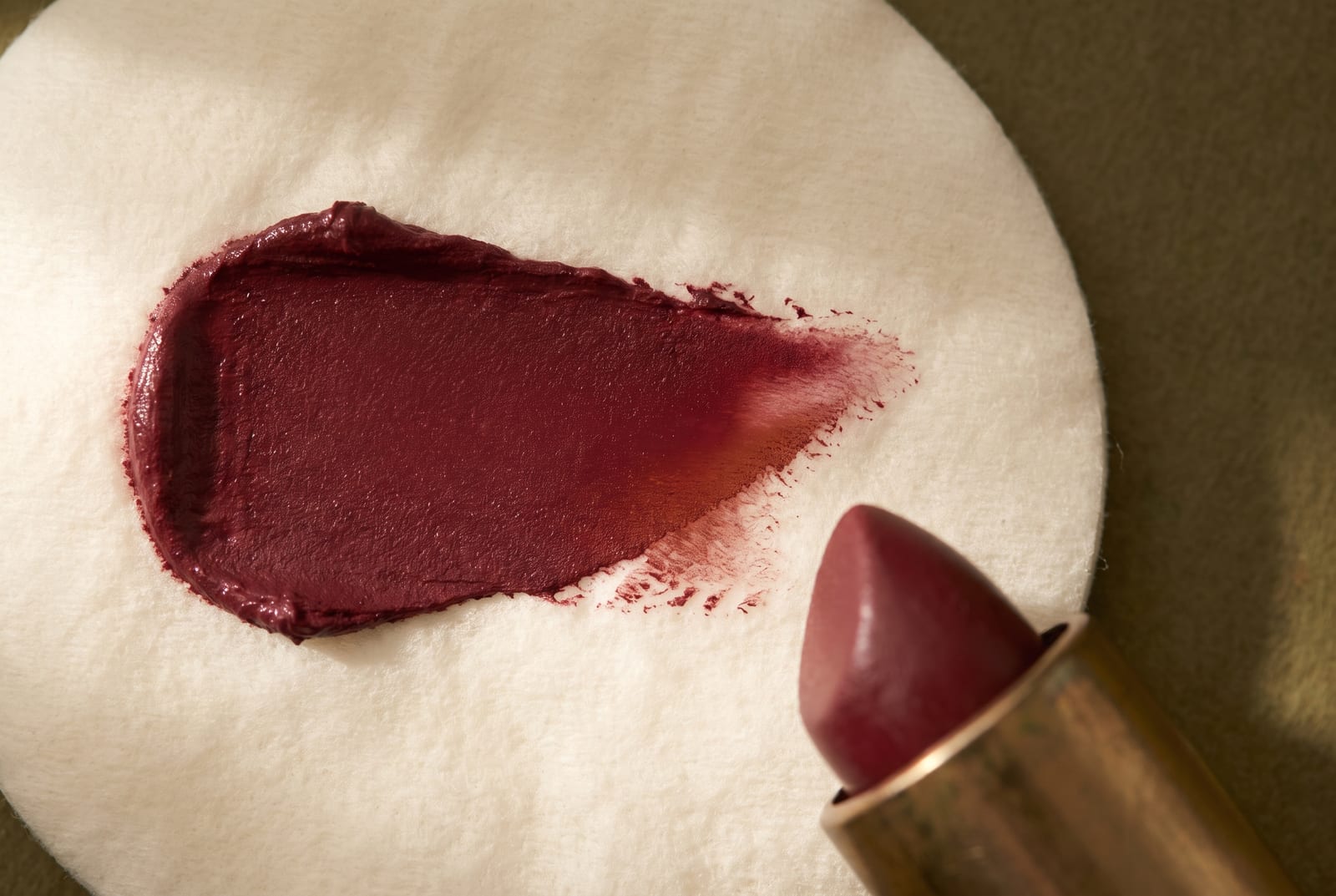
Lip. Brick, deep terracotta, warm red-brown, burgundy-brown, and copper. The deep autumn sweet spot is "warm and deep." MAC Chili is a long-running deep autumn brick. A warm berry-brown like Charlotte Tilbury's Walk of Shame reads well too. Avoid cool berry, blue-red, and frosty pink. They sit cold against the palette and pull the eye off the face.
Eye. Bronze, copper, deep olive, espresso, and antique gold. Shimmers should be gold-based, not silver. A warm-toned palette in the bronze-and-spice family fits cleanly. Avoid cool grays, icy silver, and frosty blues. They fight the warm-deep undertone every time.
Jewelry. Gold, bronze, antique brass, and copper. Metals should match the temperature of your coloring. Deep autumn runs warm, so warm metals land. Sterling silver and platinum pull cool and gray the warmth, and no amount of stylist insistence makes them sit right. If you want a cooler-looking metal, choose antiqued brass or burnished bronze rather than bright silver.
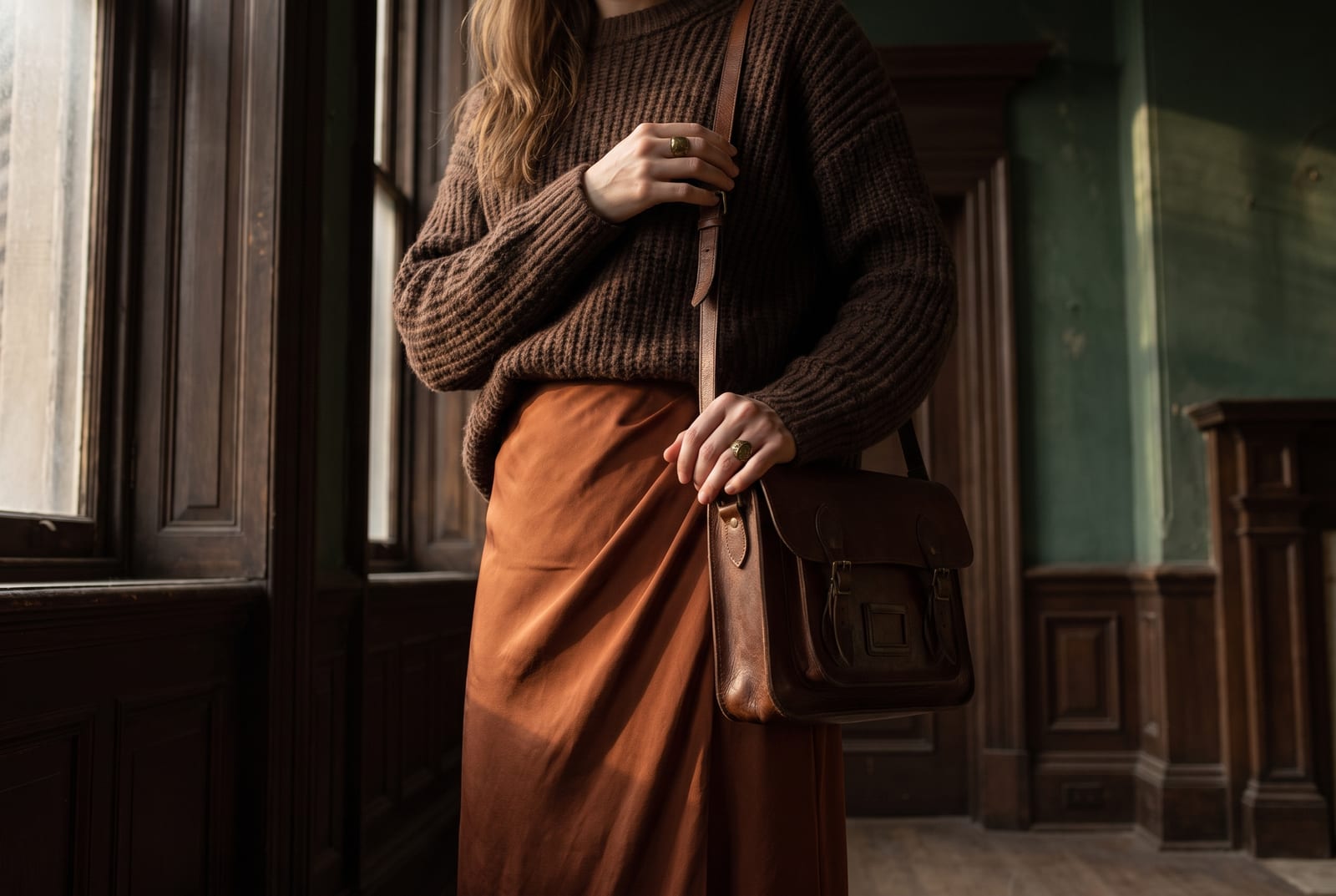
Wardrobe basics (everyday). Chocolate trench, espresso trouser, bronzed-tan knit, deep-olive jacket, cognac leather boot. All of it comes from the hex block above; pure black, stark white, and icy brights sit this season out. Heritage-leaning catalogs tend to carry pieces that sit naturally in this band during their autumn collections.
Wardrobe accents (statement pieces). Rust silk blouse, deep teal scarf, garnet wrap dress, burnished gold jewelry, forest green knit. These add color without breaking the warm-deep register. Because the coloring carries contrast, a single saturated accent against the darks does more here than it would on a softer season.
Prints and patterns. Tonal earth-tone layering, deep-on-deep florals, warm plaids, and animal print, which is practically a deep autumn signature. Unlike soft autumn, deep autumn can carry medium-to-large scale and real internal contrast, because the face already holds its own. Avoid cool gray-and-white graphic prints. The cold palette overrides the warm coloring every time.
For a wardrobe built on these principles, generate a palette in the Deep Autumn direction and use the hex output as your shopping filter.
Hair color for deep autumn
If you color your hair, hold the season's line: stay warm, stay deep, don't drift cool. The season runs on dark, warm value, so hair that holds its depth with a warm base reads as harmony. Hair that's bleached light, pushed ash, or dyed a cool blue-black reads as a fight.
The directions that work are dark and warm: espresso, dark chocolate, warm chestnut, deep auburn, and warm black. A colorist's level scale runs 1 to 10, black to lightest blonde, and deep autumn stays in roughly the 2-to-5 band. Warm black and deep espresso sit at levels 2 to 3, warm chestnut and deep auburn at 4 to 5. The words to bring to the salon: "a level 3 or 4 warm brown with a red or golden base," or "keep it dark, keep it warm, no ash."
The "no ash" half is the one to repeat. Ask for warm, golden, or red-based tones, and say out loud that no cool toner goes in, because a cool toner is what turns a good dark color flat and gray on deep autumn skin. Skip the blue and purple brass-correcting shampoos for the same reason; they strip out the warmth the season runs on.
Each one below fails on temperature or on value. Platinum, icy blonde, and bright fashion colors break the dark rule, going far too light for coloring this deep. Cool ash brown, blue-black, and cool burgundy break the warm rule and leave the skin looking tired. A flat jet black manages to pass the depth test while failing the warmth test, which is why so many deep autumns reach for it and then can't say why it feels slightly off.
For highlights, keep them warm and low in contrast: hand-painted caramel, copper, or warm chestnut, no more than two or three levels off your base. Chunky platinum streaks and cool foils undo the warm depth the season depends on. When gray starts coming in, warm dark glosses and golden-brown blending hold up better than a cool silver, which tends to wash a deep autumn out.
Comparison with adjacent seasons
Four adjacent subtypes get confused with deep autumn most often. One dial settles each of them.
Deep autumn vs. warm autumn (the depth dial). Warm autumn sits at a middle value; deep autumn sits at the dark end. Both are warm, both are moderately muted. If your natural coloring is mid-toned rather than dark, you're warm autumn. To check, hold a mid-tone caramel like #A67B5B against your face, then a deep espresso like #3D2B1F. If the caramel energizes you and the espresso feels heavy, you're warm autumn. If the espresso settles you and the caramel feels weak, you're deep autumn.
Deep autumn vs. deep winter (the warmth dial). This is the big one, and the source of most deep autumn mis-typing. Both seasons are dark and high-contrast, so darkness can't be the tiebreaker. Warmth is. Deep winter runs cool, all blue-black hair, icy contrast, and cold jewel tones. Deep autumn runs warm: espresso, rust, deep gold. The gold-versus-silver drape almost always gives the answer. If gold lights your face and silver dims it, you're on the autumn side of the dark seasons.
Deep autumn vs. soft autumn (the depth and contrast dials together). Soft autumn is light-to-medium, low-contrast, and muted; deep autumn is dark, high-contrast, and more saturated. Both are warm, so the undertone won't separate them. Value and contrast will. If your features blend softly and mid-camel suits you, you're soft autumn. If your features carry their own drama and you reach for the deepest browns, you're deep autumn. Rachel Weisz is sometimes typed right on this border, which is why some analysts call her soft autumn and others place her at the soft-to-deep autumn transition.
Deep autumn vs. true autumn (the depth dial alone). True autumn is the most-saturated, mid-depth warm season; deep autumn is the darkest. The saturation is similar; the value is what moves. If rich mid-toned rust and pumpkin are your best colors and the very darkest browns start to swallow you, you're true autumn. If the darkest end of the palette is where you come alive, you're deep autumn.
Deep autumn vs. soft summer (the warmth dial, across the muted seasons). This pairing looks unlikely until you watch how it happens. Both seasons get told they're "muted, not bright," and that one shared word sends some warm-deep people to a cool-muted season, where they get drained. Soft summer is cool, light-to-medium, and muted; deep autumn is warm, dark, and only moderately muted. The mix-up is uncommon, but it's a costly one, because the temperatures are opposite. The test is the familiar one, gold versus silver, and which of the two a deep espresso flatters more than a cool gray-blue.
One last myth to clear, because it trips people up: deep autumn and dark autumn are the same season under two names. Some charts list "deep autumn" and "dark autumn" as if they were different subtypes; they aren't. The Sci\ART-derived 12-season systems tend to say "dark autumn," other charts say "deep autumn," and they're describing the identical warm, dark, moderately muted corner of the autumn family. If you've been bouncing between the two labels, you're already in the right place.
The full 12-season comparison lives on the seasonal color analysis hub.
Frequently asked questions
How do I know if I'm a deep autumn? Check three anchors: your hair should be dark with a warm undertone, your eyes should be dark hazel, deep olive-green, or warm brown, and your skin should have a warm undertone with high contrast against your hair and eyes. If three of three match, you're almost certainly deep autumn. If two match and the rest skew cooler, you're likely deep winter instead.
Can deep autumn wear black?
Yes, better than any other autumn, because it's the darkest season. But a warm near-black like #2E2017 flatters more than a flat cool black, which can read slightly muddy and harsh against warm skin. Reserve true black for accessories and structured pieces, and let warm near-black do the work of a main garment.
Is deep autumn warm or cool? Warm. The "deep" in the name is a value word, not a temperature word. Deep autumn sits at the darkest, least-warm end of the autumn family, but it stays warm: gold over silver, espresso over blue-black, rust over true red. Anyone reading the darkness as coolness is mis-sorting the season.
What's the difference between deep autumn and deep winter? Warmth. Both seasons are dark and high-contrast, which is why they get confused. Deep winter is cool, with a blue undertone and icy bright accents; deep autumn is warm, with a golden undertone and spiced dark accents. The gold-versus-silver drape decides it, and it decides it on undertone, not on how dark you are.
What's the difference between deep autumn and warm autumn? Depth. Both seasons are warm; warm autumn runs at a middle value (caramel, cinnamon, ochre) while deep autumn runs dark (espresso, garnet, deep olive). A warm autumn in deep autumn's darkest browns looks weighed down. A deep autumn in warm autumn's mid-tones looks slightly washed out and underpowered.
Can deep autumn have dark skin? Yes. Deep autumn is set by warm undertone, dark value, and contrast, not by a specific skin tone. Plenty of deep autumns have deep skin. The common mistake is defaulting deep skin to a "deep winter" season on contrast alone, when the warm-versus-cool drape is what actually decides, and it often lands on the warm side.
Is deep autumn the same as dark autumn? Yes. Deep autumn and dark autumn are two names for one season: the darkest, warm, moderately muted corner of autumn. Sci\ART-derived systems tend to say "dark autumn," other charts say "deep autumn," and there's no real difference between them. If you've been typed one and are reading about the other, you're in the right guide.
What's the best metal jewelry for deep autumn? Gold, bronze, antique brass, and copper. The rule is undertone-matching: deep autumn coloring runs warm, so warm metals land. Sterling silver and platinum pull the warmth out of the skin, a temperature clash the eye catches before the brain does. If you want a cooler look, antiqued brass gives it without going truly cold.
Can men have deep autumn coloring? Yes. Season is a property of coloring, not of gender. Men with dark warm hair, dark hazel or warm brown eyes, and warm golden or bronze skin fit the deep autumn profile in exactly the same way women do. The dial settings are identical. The translation into menswear is straightforward: espresso and chocolate tailoring, rust and forest-green knits, bronze leather, and warm spiced accents. Avoid flat jet-black suiting, stark white dress shirts paired with icy-toned ties, and cold-saturated tech-fleece colorways. The market for masculine deep autumn references is thinner than the women's-style one, but the analysis applies cleanly.
Disclosure: BrandColors makes the color-palette generator linked in this guide. The seasonal typings and palettes above are drawn from the external color-analysis sources named throughout (theconceptwardrobe, truth-is-beauty, Spicemarket Colour, and others), not from our product. Last updated July 24, 2026.
Related palettes: Soft Autumn · Warm Autumn · Soft Summer · Seasonal color analysis hub