Color season analysis is a method for matching your natural coloring (skin, hair, and eyes) to the colors that make you look more awake and the ones that drain you. The modern version sorts everyone into one of 12 seasons. Older charts used four (spring, summer, autumn, and winter). The 12-season system keeps those four families and splits each into three, because four buckets were never fine enough to tell a muted person from a bright one inside the same family.
Most of what gets sold as seasonal color analysis online is a quiz that asks your eye color and hands you a label. That skips the part that does the work. Real color season analysis turns on four measurable dials: warmth, value, chroma, and contrast. Your season is the specific combination those four land on. Get the dials right and the season falls out of them. Get them wrong and you'll spend $300 on a sweater that fights your face.
This is the hub page for the whole system. It explains what the four dials are and how four seasons become 12. It then gives a short decision path plus the drape test to find your own season, a one-line card for all 12, and links out to the deep guides for each one.
What color season analysis measures: the four dials
Every season is a setting on four dials. Learn the dials and you stop memorizing 12 palettes and start reading coloring directly.
Warmth (the undertone). Your skin leans either golden-and-yellow or pink-and-blue, and that lean is the undertone. This is the dial people feel most confident about and still get wrong, because a tan or a flush sits on top of the undertone and hides it. Warmth is the great divider: springs and autumns are warm, summers and winters are cool. Gold jewelry flattering you more than silver is the everyday warm tell.
Value (light to deep). Value reads how light or dark your overall coloring is, taken as one picture. A light blonde with fair skin and pale eyes sits at the light end. Dark brown hair with deep eyes sits at the deep end. Value is about the whole face read at once, not any single feature.
Chroma (bright to muted). Chroma is saturation: how clear and vivid your coloring is versus how soft and grayed. A muted person looks like someone laid a thin sheet of tissue over their features; a bright person looks like the saturation got turned up. This is the dial most quizzes ignore, and it's the single most common reason for a mis-type. Warm and muted are different dials, which is why "warm autumn" and "soft autumn" call for different palettes.
Contrast (low to high). Contrast is the gap between your hair, skin, and eyes. Dark hair against fair skin and light eyes is high-contrast. Mousey hair, medium skin, and soft eyes that melt together is low-contrast. Contrast tracks closely with the winter-to-summer axis: winters carry the most internal contrast, summers and the soft seasons carry the least.
The reason the dials matter more than the label is that they're checkable. You can hold gold against silver and watch your skin. You can squint at a bare-faced photo and judge whether your features blend or pop. A quiz that hands you "you're an autumn" without testing all four dials is reading one of them and guessing the rest.
How four seasons become 12
The four base seasons each name a corner of color space. Spring is warm and bright. Summer is cool and soft. Autumn is warm and muted. Winter is cool and bright. That's tidy, but it's coarse: two people can both be "autumn" and need genuinely different colors, because one is soft and medium while the other is deep and almost winter.
The 12-season system fixes that by giving every base season a true core and two variants that drift toward a neighbor. The variant is named by whichever dial dominates. Autumn splits into soft autumn (drifts toward summer's mutedness), true autumn (the warm core), and deep autumn (drifts toward winter's depth). Winter splits into bright winter, true winter, and deep winter. Summer splits into light, true, and soft. Spring splits into light, true, and bright.
Stack the variants and a cleaner pattern shows up: six tonal directions, each shared by two seasons. Light is shared by light spring and light summer. Deep belongs to deep autumn and deep winter. Bright pairs bright spring with bright winter; soft, or muted, pairs soft summer with soft autumn. Warm runs through true spring and true autumn, and cool through true summer and true winter. Six directions across four families gives 12 seasons, and it's why two seasons from different families can look like cousins. A soft summer and a soft autumn share the muted dial; only the warmth dial separates them.
Here is the whole system as a single picture: two signature colors for each of the 12 seasons, grouped by family.
The spread is the point. Spring's colors hold light and warmth at once. Summer's sit cool and hazy. Autumn's carry weight and gold. Winter's stay cold and loud. Your season is the patch of this map your own coloring belongs to.
How to find your season
You don't need all 12 palettes memorized. You need to set the four dials in order, narrow to a family, then confirm with one physical test. Work the dials from the most reliable to the least.
- Warm or cool? Hold a gold necklace under your chin in daylight, then a silver one. Whichever makes your skin look clearer and your under-eyes calmer is your metal. Check your wrist veins too: greenish reads warm, blueish reads cool. Gold-and-green puts you in spring or autumn; silver-and-blue puts you in summer or winter.
- Light or deep? Take a bare-faced photo in daylight and turn it grayscale. If everything reads pale and close in tone, you're light. If there's real darkness in your hair or eyes, you're deep. This splits warm into spring (lighter) versus autumn (deeper), and cool into summer (lighter) versus winter (deeper).
- Bright or muted? Back in color, ask whether your features pop or blend. Clear, saturated coloring that holds its own against a bright shirt leans bright (bright spring, bright winter). Soft coloring that a bright shirt overpowers leans muted (soft summer, soft autumn).
- Read the contrast. High contrast between hair, skin, and eyes pushes you toward winter or true spring. Low contrast pushes you toward summer or the soft seasons. Contrast is the tiebreaker when the first three dials leave you between two neighbors.
After those four steps you'll be standing on one or two seasons. Confirm with the drape test, which is the move professional analysts actually trust.
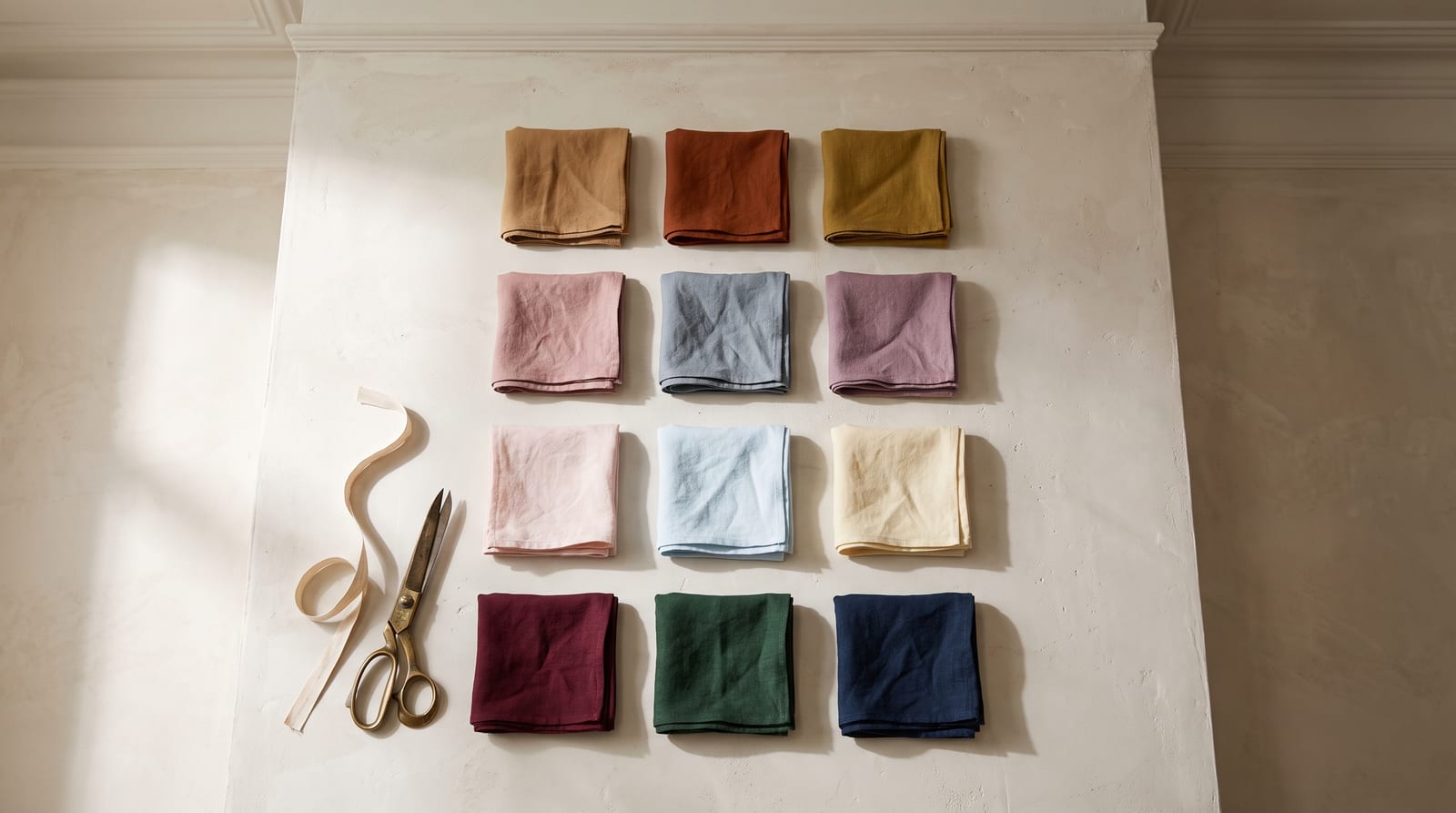
The drape test. Sit in daylight near a window, no makeup, hair pushed back, wearing a neutral cream or gray top. Hold a piece of fabric in a candidate color up under your chin and watch your skin, not the fabric. The right color makes shadows recede, the skin look even, and the eyes brighten. The wrong color throws shadows under your nose and mouth, pulls blood out of your lips, or makes the fabric shout while your face goes quiet. Drape a warm muted camel against a cool bright fuchsia and the difference is usually obvious within two seconds. Test in pairs (warm against cool, bright against muted), because a color only means something next to its opposite.
If two seasons keep tying, you're probably on a real border: some people sit between two seasons rather than dead-center in one. Pick the season whose worst colors you can most afford to avoid, and treat the shared colors as your safest buys.
Once you've settled on a season, generate a palette in that direction and use the hex output as your shopping filter.
The 12 seasons at a glance
One line each: the dials that define it, the colors it lives in, and a face that reads that way across the named color-analysis communities. Use these as a shortlist, then read the full guide for whichever one fits.
Spring family (warm)
| Season | The dials | Signature colors | Reads this way |
|---|---|---|---|
| Light Spring | warm, light, fairly bright, low-contrast | peach, butter yellow, light warm aqua | Taylor Swift |
| True Spring | warm, medium, bright | coral, golden green, warm turquoise | Amy Adams |
| Bright Spring | warm-leaning, bright, high-contrast | hot turquoise, warm magenta, clear green | Emma Stone |
Spring is the warm-and-clear family. If gold suits you and your coloring still reads fresh and lit rather than earthy, you're somewhere in spring. Each subtype has its own guide: light spring at the palest end, warm spring at the warm core, and bright spring where the saturation peaks. The trap is mistaking a bright spring for a winter, since both run high-contrast; the warmth dial is what separates them. Amy Adams is the cleanest true spring anchor, typed across four independent community lists, a level of agreement almost no other name in seasonal analysis manages. Nicole Kidman shows how open the subtype can be at the borders. Spicemarket Colour and The Aligned Lover both read her a possible true spring, while Soul of Color types her light spring. The spring family is safe; the variant stays contestable.
Summer family (cool)
| Season | The dials | Signature colors | Reads this way |
|---|---|---|---|
| Light Summer | cool, light, soft, low-contrast | cool pastel pink, powder blue, soft lilac | Cate Blanchett |
| True Summer | cool, medium, soft | cool rose, true blue, dusty purple | Emily DiDonato |
| Soft Summer | cool-leaning, muted, low-contrast | dusty mauve, slate teal, smoky lavender | Adriana Lima |
Summer is the cool-and-soft family. Silver suits you, your coloring blends rather than pops, and bright colors tend to wear you. The full soft summer palette and the cool summer palette cover the two most-searched members; light summer is the palest, and truth-is-beauty types Cate Blanchett there. Soft summer is the bridge to autumn, which is why it gets confused with soft autumn so often.
Autumn family (warm)
| Season | The dials | Signature colors | Reads this way |
|---|---|---|---|
| Soft Autumn | warm, medium, muted, low-contrast | camel, sage-olive, dusty rose | Drew Barrymore |
| True Autumn | warm, medium-deep, rich | rust, golden ochre, olive | Julianne Moore |
| Deep Autumn | warm-leaning, deep, rich | oxblood, deep teal, bronze | Halle Berry |
Autumn is the warm-and-earthy family. Gold suits you and your colors carry weight rather than lightness. The three deep guides cover the spread: the muted end at soft autumn, the warm core at warm autumn, and the darkest corner at deep autumn. True autumn is well documented across skin tones; Julianne Moore and Beyoncé both anchor it on most lists, and Jennifer Lopez turns up too, though her lists split between true and soft autumn. Eva Mendes sits at the deep, warm end of autumn: some analysts call her true autumn, others dark autumn. Spicemarket Colour types her dark autumn, while Soul of Color types her true autumn.
Winter family (cool)
| Season | The dials | Signature colors | Reads this way |
|---|---|---|---|
| Bright Winter | cool-leaning, bright, very high-contrast | icy magenta, cobalt, true emerald | Megan Fox |
| True Winter | cool, deep, saturated, high-contrast | true red, sapphire, pine | Liv Tyler |
| Deep Winter | cool, deepest, saturated | black-plum, deep emerald, charcoal | Anne Hathaway (subtype debated) |
Winter is the cool-and-saturated family. Silver suits you, your contrast is the highest of any season, and you can carry pure black and true white that flatten everyone else. The full guides sit at bright winter for the most saturated, cool winter for the cool core, and deep winter for the darkest. The cleanest anchors in the family are Megan Fox for bright winter and Liv Tyler for true winter, the two most-agreed names winter has. Beyond those, winter's subtypes are the most argued-over in the hobby, so read the contested names below as winters first and sub-seasons second. theconceptwardrobe types Courteney Cox a true winter, while four seasons studio, Spicemarket Colour, and The Aligned Lover read her bright winter. Either way she is a cool, high-contrast winter. Elizabeth Taylor lands as a clear winter on every list, with hobbyist sources splitting between cool winter and bright winter rather than agreeing on one. Anne Hathaway is the same story: four seasons studio calls her dark winter, Spicemarket Colour calls her true winter, and theconceptwardrobe and truth-is-beauty record only winter. In all three cases the family is settled and the subtype is not.
Which seasons get confused, and how to break the tie
Almost every mis-type is two adjacent seasons sharing one dial and differing on another. Four pairs cause most of the trouble.
Soft autumn vs soft summer. Both are muted and low-contrast, so people fixate on the softness and miss the undertone. The tiebreaker is warmth: soft autumn brightens under gold and camel, soft summer brightens under silver and gray-rose. The soft summer guide lays out the cool side in full.
Soft autumn vs true autumn. Both are warm, so people fixate on the gold and miss the saturation. True autumn can wear a saturated rust without being swallowed; soft autumn looks tired in it. If your favorite rust sweater drains you no matter how many compliments it earns, you're likely the softer one. Compare the soft autumn and warm autumn palettes side by side.
True autumn vs deep autumn. Both are warm and rich; the difference is value. If you reach for oxblood, bronze, and deep teal more comfortably than mid-rust and ochre, you're at the deep autumn end.
Bright spring vs bright winter. Both are bright and high-contrast, which is why they trade names constantly. The only dial that separates them is warmth: bright spring runs warm and golden, bright winter runs cool and icy. Hold a warm coral against an icy fuchsia and watch which one your skin agrees with.
There is no light autumn, by the way. The standard system gives autumn three members (soft, true, and deep), and "light" belongs to spring and summer. If you're warm and light and circling autumn, the real fork is soft autumn versus light spring.
A note on skin tone and who gets documented
The dials are about undertone, mutedness, value, and contrast. None of them is about how light or dark your skin is. Every season exists at every depth, and a deep-skinned person can be a soft, low-contrast season just as easily as a high-contrast one.
The trap is reading deep skin as automatically "deep winter." In color analysis, "deep" means high internal contrast and dark value across the whole face, not the skin's depth on its own. Plenty of people of color get filed under deep winter on skin tone alone when their real coloring is warm and earthy. Zendaya shows how contested this gets. Warm-leaning analysts type her deep autumn while a cool-leaning minority reads her deep winter, because deep warm and deep cool coloring can look alike in a photo with the wrong lighting.
The record has a real limit: the deeper the skin, the thinner it gets, and South Asian coloring is especially under-recorded. Priyanka Chopra is a good example of how the sanctioned read and the AI tools diverge. Spicemarket Colour types her dark winter and The Aligned Lover lists her as a possible dark winter, while no named community reads her deep autumn. AI quizzes still mislabel her deep autumn because the deep-autumn-to-deep-winter line is genuinely hard to read on deep skin, but the sourced answer is deep winter. That thin documentation is a gap in who gets analyzed, not proof the seasons skip a group. The drape test works at any depth: gold versus silver, bright versus muted, the colors that light your face versus the ones that take it over. None of it depends on being fair.
Frequently asked questions
What is color season analysis? Color season analysis matches your natural coloring (skin, hair, and eyes) to the set of colors that flatter you, sorting you into one of 12 seasons. It reads four dials: warmth, value, chroma, and contrast. Your season is the specific combination those four land on, not your favorite color or your eye color alone.
How do I find my color season? Set the dials in order. First warm or cool (gold versus silver jewelry), then light or deep (a grayscale photo), then bright or muted (do your features pop or blend), then read your contrast. That narrows you to one or two seasons. Confirm with the drape test in daylight, bare-faced, comparing colors in pairs.
What is the drape test? You hold fabric in a candidate color under your chin in natural daylight, no makeup, and watch your skin rather than the fabric. The right color evens your skin and brightens your eyes; the wrong one casts shadows and pulls color from your lips. Testing colors in opposite pairs, warm against cool, makes the difference visible fast.
Are online color season quizzes accurate? Usually not. Most quizzes read one dial (often eye color) and guess the rest, which is why two quizzes give two answers. They skip chroma almost entirely, and chroma is the dial that separates warm-and-bright from warm-and-muted. A quiz is a starting point; the drape test is the check that settles it.
How many color seasons are there? 12 in the standard modern system. The four base seasons (spring, summer, autumn, and winter) each split into three: a true core plus two variants that drift toward a neighbor, named light, soft, deep, or bright. Some practitioners use a 16-season version, but 12 is the common framework and the one this hub maps.
Is seasonal color analysis real or is it pseudoscience? The undertone and contrast part is real and repeatable: warm versus cool skin and high versus low contrast are observable, and the drape test produces consistent results in controlled light. The myth to avoid is anyone selling you a single perfect season from a photo or a quiz. Treat it as a useful sorting tool, not a law.
Disclosure: BrandColors makes the color-palette generator linked in this guide. The seasonal typings and palettes above are drawn from the external color-analysis sources named throughout (theconceptwardrobe, truth-is-beauty, Spicemarket Colour, and others), not from our product. Last updated July 24, 2026.
All twelve palettes: Light Spring · Warm Spring · Bright Spring · Light Summer · Cool Summer · Soft Summer · Soft Autumn · Warm Autumn · Deep Autumn · Bright Winter · Cool Winter · Deep Winter